To toast pine nuts, spread the nuts evenly onto a baking sheet and place in a 350°F oven. Toast for four to six minutes, but be sure to keep an eye on them as they can easily burn.
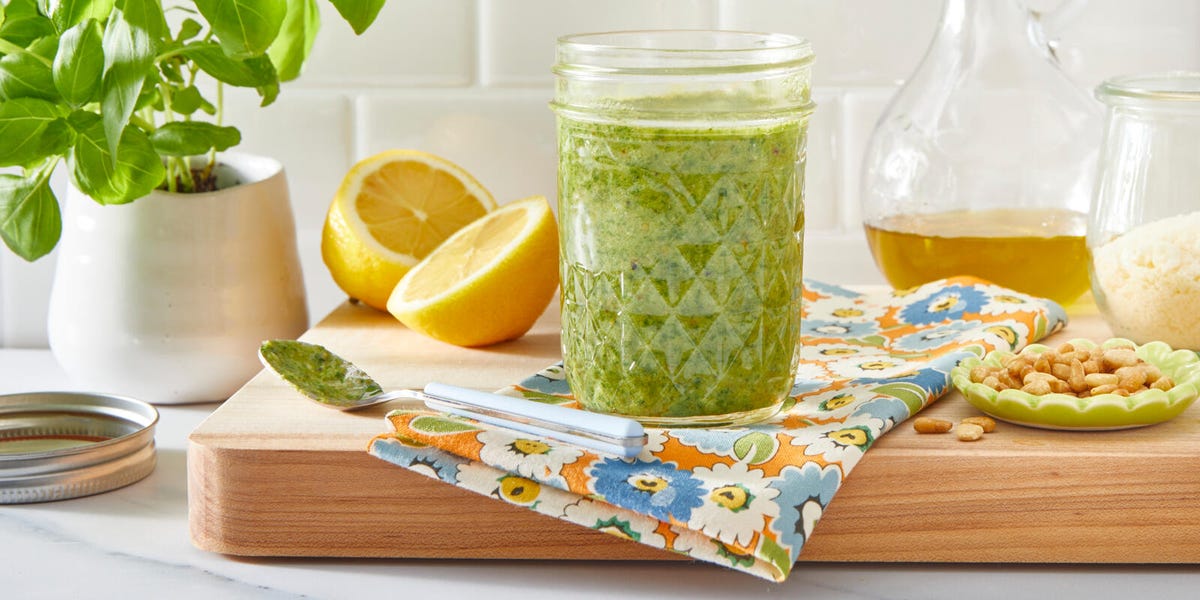
1. In a food processor, combine the pine nuts, lemon juice (if using), garlic, salt, black pepper, and red pepper flakes. Pulse until the pine nuts are finely chopped and the ingredients are well combined, scraping the sides of the processor bowl with a rubber spatula.
2. Add the basil and pulse to combine. With the food processor running, slowly stream in the oil until well combined. Add the parmesan cheese and pulse to combine.
3. Store the pesto in an airtight container for up to one week.
Homemade Reduced-Salt Chicken Stock Makes approximately 2.5–3 litres Ingredients * 1.5–2 kg chicken bones/carcasses * chicken frames are perfect and inexpensive * wings, necks and backs are also excellent * 2 large carrots, roughly chopped * 2 celery stalks, roughly chopped * 2 brown onions, quartered * 4 garlic cloves, lightly crushed * 2 bay leaves * 6–8 whole black peppercorns * Small handful fresh parsley, including stalks * 2–3 sprigs fresh thyme, optional * Approximately 3.5–4 L cold water, or enough to just cover everything * No added salt I actually recommend making it without salt altogether. Then when you use 1 cup in a recipe, you control the salt in that particular dish. It essentially becomes your own no-added-salt chicken stock. Method 1. Optional, but excellent for flavour: place the chicken bones on a roasting tray and roast at 200°C fan-forced for 30–40 minutes, until lightly golden. You don’t need them deeply browned. 2. Transfer the bones to a large stockpot. Add the carrot, celery, onion, garlic, bay leaves, peppercorns, parsley and thyme. 3. Pour over enough cold water to just cover everything. You don’t want excessive water because you’re aiming for a flavourful stock rather than a watery broth. 4. Slowly bring it just to a simmer. 5. Once simmering, turn the heat right down. You want the occasional gentle bubble — not a rolling boil. 6. Simmer uncovered for around 3–4 hours. Occasionally skim away any foam/fat that rises to the surface. Add a little hot water if necessary to keep the bones mostly submerged. 7. Strain everything through a fine sieve. Don’t press or mash the vegetables through; just allow the liquid to drain. 8. Return the strained stock to the clean saucepan and simmer uncovered for another 20–40 minutes, if needed, until you’ve got roughly 2.5–3 litres and the flavour is pleasantly concentrated. 9. Cool promptly, then refrigerate. Once completely cold, you’ll probably see a layer of chicken fat set on top. Lift this off for an especially low-fat stock.






 Chrome Extension
