
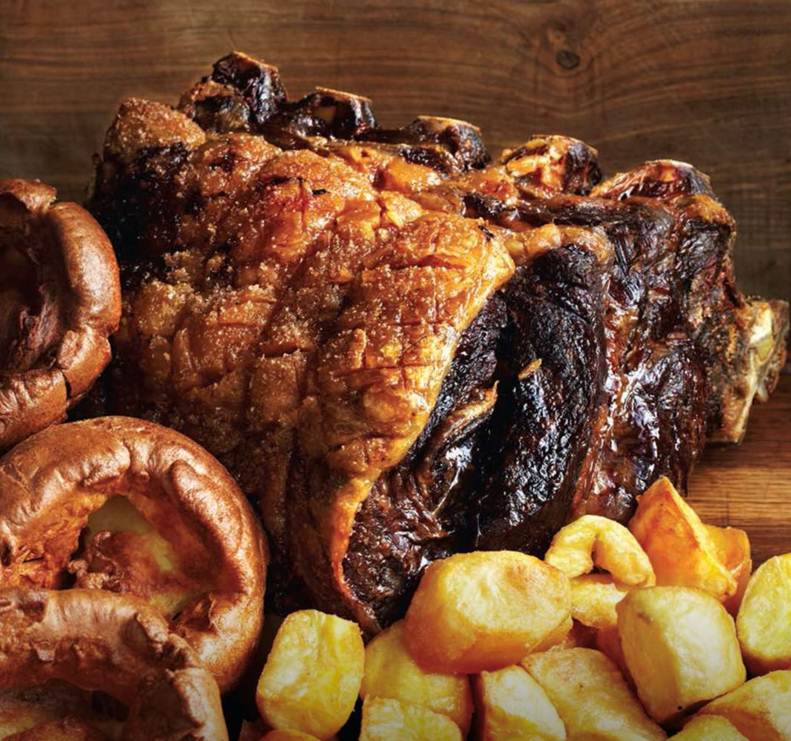
Score the covering fat of the beef in a criss-cross pattern to a depth of about 5mm. Season thoroughly with salt and pepper and rub the seasoning into the scored fat. Don’t be shy with the salt. Crispy, salty beef fat is absolutely divine, and your guests will be asking for second helpings!
Place the fore rib in your largest roasting tray, resting it on the flat chine bone with the ribs pointing upwards. Place in the oven and roast at this high temperature for the first 25 minutes before turning the oven down to 160ºC. This initial blast on a high temperature will seal the outside of the beef so that it retains its juices as it roasts. When you turn down the oven, remove the beef.
You will notice that the fat has started to render out of the joint. Add the vegetables to the roasting tray, placing them around the joint, and mix them in the fat, coating them well. Place the beef back into the oven to roast for the weight-specified time.
Check the vegetables after 15 minutes and give them a stir so they caramelise evenly. Remove the vegetables after about 30–35 minutes, once nicely browned, and place them to one side for the gravy.
Once the beef is ready, remove it from the oven to rest in a warm part of the kitchen for a good 15–30 minutes. A 3-bone joint should rest for at least 15 minutes and 5-bone joints about 25–30 minutes. Before taking the joint to the table to carve, place it back into the oven for 5 minutes to bring it back to a suitable serving temperature.
Serve your beef with the gravy, roast potatoes, Yorkshire puddings and horseradish cream.